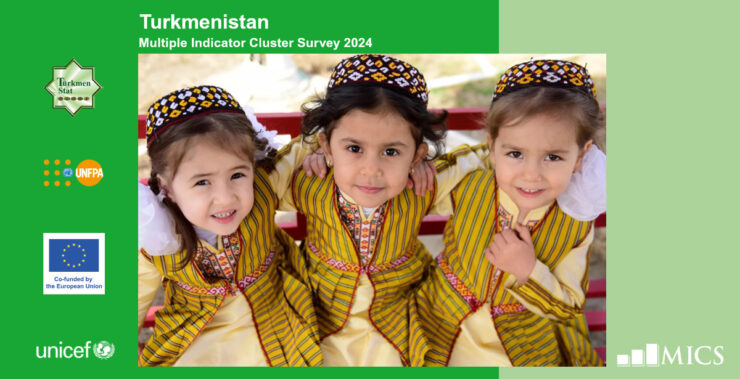
The 2026 Leaving No One Behind (LNOB) brief published by the United Nations Economic and Social Commission for Asia and the Pacific (ESCAP) provides an updated assessment of inequality of opportunity in Turkmenistan using the Multiple Indicator Cluster Surveys (MICS 7) 2024 data. The MICS is an international multi-purpose household survey developed by UNICEF to support countries in collecting internationally comparable data on a wide range of indicators on the situation of children and women.
The report’s findings identify the largest inequality gaps in Turkmenistan, primarily in early childhood education, tertiary education, and youth not in education, employment, or training (NEET).
Compared with the earlier LNOB assessment based on 2019 data, the findings indicate that education-related opportunity gaps remain structural and persistent, and, most importantly, the 2026 update highlights growing concerns about female youth NEET rates as a major emerging inequality concern.
Early Childhood Education: Only 16% of children aged 3-4 living in poorer rural households with young siblings attend early childhood education, despite this group representing 20% of all children of the same age nationwide. This reinforces earlier 2022 findings that children in large rural households remain among the most disadvantaged groups in access to early learning opportunities.
Tertiary Education: Among women living in rural areas, only 4% of those aged 25-35 have completed tertiary education. This furthest-behind group represents 27% of all individuals aged 25-35 in Turkmenistan.
Donate to support Turkmen analysts, researchers and writers to produce factual, constructive and progressive content in their efforts to educate the public of Turkmenistan.
SUPPORT OUR WORKYouth NEET (Not in Education, Employment or Training): Approximately 20% of young women in Turkmenistan are NEET. The rates are even higher among young mothers aged 15-24: 49% of women with at least one child, with substantially rising rates reaching 56% among women aged 18-22 with children. Childbirth and age are found to be major factors of labor market exclusion among young women in Turkmenistan. Women with children are four times more likely to be NEET than those with no children, demonstrating how early motherhood and unpaid care responsibilities significantly limit young women’s opportunities. Household wealth is also among the factors that matter among women without children. Women living in richer households are less likely to be NEET than women living in poorer households in either age group.
Violence Against Women: The report also identifies important disparities related to gender-based violence. Among women living in urban areas with children under five, 36% experienced intimate partner violence in the previous 12 months, four times higher than the national prevalence. This group represents 8% of ever-partnered women aged 15-49 and faces the highest risk of violence.
Overall, consistent between the 2022 and 2026 LNOB country briefs, the assessments find relatively small gaps in inequality in access to basic drinking water, sanitation, electricity, and child nutrition. However, structural opportunity gaps remain strong in access to education, gender equality, and youth labor-market participation, with rural households, poorer populations, and especially young mothers continuing to be the groups most at risk of being left behind.
Progres has highlighted the MICS7 findings in Children and Women at Risk: What MICS7 Reveals About Protection and Opportunity in Turkmenistan.