A survey of 97 women and girls conducted through the Bilim app reveals significant gaps in contraceptive knowledge and access in Turkmenistan.
Among the key findings:
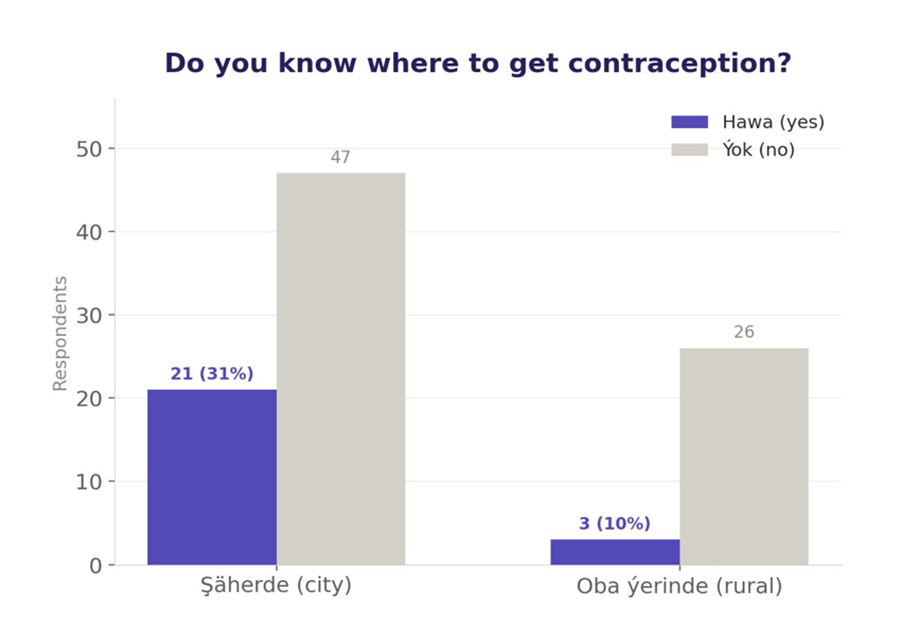
- 75% of respondents do not know where or how to access contraception;
- Among sexually active respondents, roughly 7 out of 10 are unprotected;
- 90% of rural respondents do not know how to obtain contraception (vs. ~69% in cities);
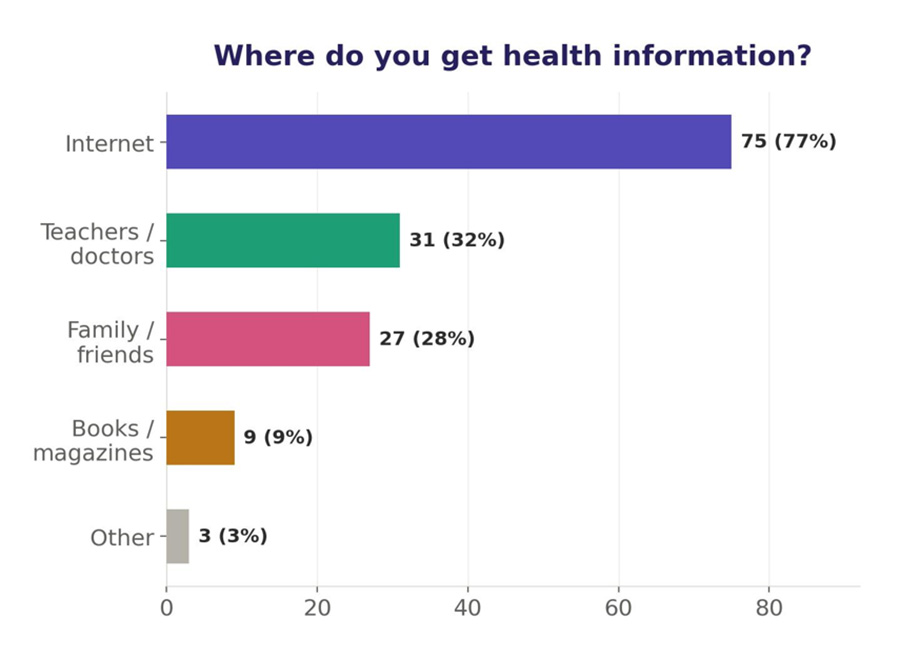
- The internet is the dominant source of health information, yet access to quality, reliable content in the Turkmen language remains extremely limited.
Women and girls in Turkmenistan face significant barriers to reproductive healthcare, leaving them vulnerable to unintended pregnancies, unsafe abortions, and maternal health complications. While digital connectivity is rising, a profound knowledge gap persists regarding where and how to obtain contraception. This article presents findings from a recent survey by BILIM and Joralar – two Turkmen-led initiatives – highlighting the urgent need for culturally appropriate health education and expanded services, particularly in rural communities. Bilim app is a project of Progres Foundation.
While our survey is small in scale, its findings echo patterns confirmed by larger, national-level studies. The 2024 Multiple Indicator Cluster Survey (MICS) reported that nearly 18% of family planning demand in Turkmenistan remains unmet. Similarly, recent UN reports indicate that while roughly 80% of women of reproductive age (15-49) use modern contraceptive methods, a significant portion – nearly one in five – still lack the access or information necessary to manage their reproductive health.Our findings suggest that this “unmet need” is exacerbated by a critical lack of awareness, which formal surveys may often undercount.
The Legal and Social Landscape of Reproductive Rights
Women and girls make up half of the population in Turkmenistan. The constitution grants men and women equal rights and freedoms as well as equal opportunities to exercise those rights. Since 1997, Turkmenistan has been part of the international UN treaty that aims to eliminate all forms of discrimination against women (CEDAW). And in 2021, Turkmenistan adopted a National Action Plan on Gender Equality for 2021-2025 and later for 2026-2030.
Nevertheless, women continue to face restrictions and violations of their bodily autonomy. MICS surveys conducted in 2024 by UNFPA, UNICEF, EU and the State Statistics Committee of Turkmenistan shows that 54.1% of women aged 15-49 and married or in a union use a modern or traditional contraceptive method. Of the same group of women, only 62.1% make their own decisions regarding sexual relations, contraceptive use and health care. The survey also says that among those women 82.1% of the demand for family planning is satisfied, which indicates that the unmet need for family planning stands at about 18%. MICs also highlights the non-use of contraception as the highest among the youngest age groups: 92.3% of married women aged 15-19 and 75.6% of those aged 20-24 use no contraceptive method at all.
In 2022, the government of Turkmenistan reduced the legal gestational limit for abortion from 12 weeks to 5 weeks, which further curtailed reproductive rights. Despite more than 90 reproductive health rooms operating throughout the country and offering family planning, contraception and disease prevention services, the number of women aware of those services or making use of them remains unknown. Neither the local UNFPA agency nor the Ministry of Health publish relevant data on their websites.
In order to understand the contraception knowledge, usage and access of BILIM app users and Joralar Instagram followers that are living in Turkmenistan, the BILIM app team in collaboration with the Joralar team created and conducted a short survey between September and December 2025. The survey was in the Turkmen language and consisted of 4 questions and a total of 97 responses were collected.
Survey Organization and Methodology
BILIM is the only mobile menstruation tracker in Turkmen language that also offers information about women’s health and rights in Turkmenistan. It has about 2000 monthly users, the majority of whom reside in Turkmenistan. Bilim is a project of Saglyk.org, a flagship program at Progres Foundation that works to improve public health literacy in Turkmenistan.
Joralar is an initiative dedicated to women’s health and empowerment. It is hosted on Instagram and has over 29,000 followers. The page features content created by certified doctors who offer reliable health information and foster a safe and supportive space where its community members can have open discussions and ask sensitive questions. The platform is closely connected to women in Turkmenistan, as its content is created in the local language and reflects the social and cultural realities in which access to open discussions on women’s health is limited.
The teams surveyed users across both platforms (BILIM and Joralar) residing in Turkmenistan using four targeted questions. To assure respondents that no personal information was being collected, we refrained from asking age-related questions. As a result, age can only be inferred indirectly. Based on respondents’ reported behaviors and demographic characteristics, the vast majority appear to be women of reproductive age. Respondents answered the questions on Google Forms and each respondent was, by default, limited to giving only one response. The questions included:
- Do you live in a city or a village?
- Do you use any method of contraception to prevent pregnancy?
- Do you know where and how to get contraception?
- Where do you get sexual and reproductive health information?
The survey ran for three months and 97 respondents shared their feedback. The findings reveal disparities not only in contraception knowledge and access between urban and rural respondents, but also in digital literacy levels among them.
Donate to support Turkmen analysts, researchers and writers to produce factual, constructive and progressive content in their efforts to educate the public of Turkmenistan.
SUPPORT OUR WORKSurvey Findings: Barriers to Access and Awareness
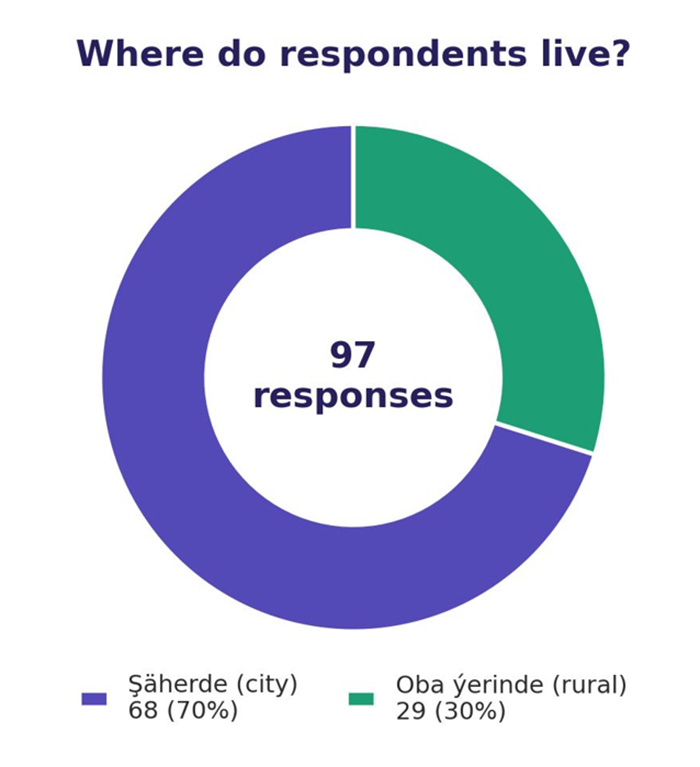
Most of the respondents said (70%) they are residing in cities. This suggests that women and girls living in rural Turkmenistan are underrepresented in the digital spheres which makes it hard to understand their lived realities using digital research tools. Still, even the limited data we have about them can give glimpses into their contraception usage and reproduction knowledge.
Despite 77% of respondents referencing the Internet as their main source of sexual and reproductive health, over 75% do not know where and how to access contraception. The high level of internet usage shows higher levels of digital literacy. However, the lack of contraception access awareness indicates vulnerability to online misinformation and an urgent need for quality and reliable information sources in Turkmen language as well as effective educational campaigns.
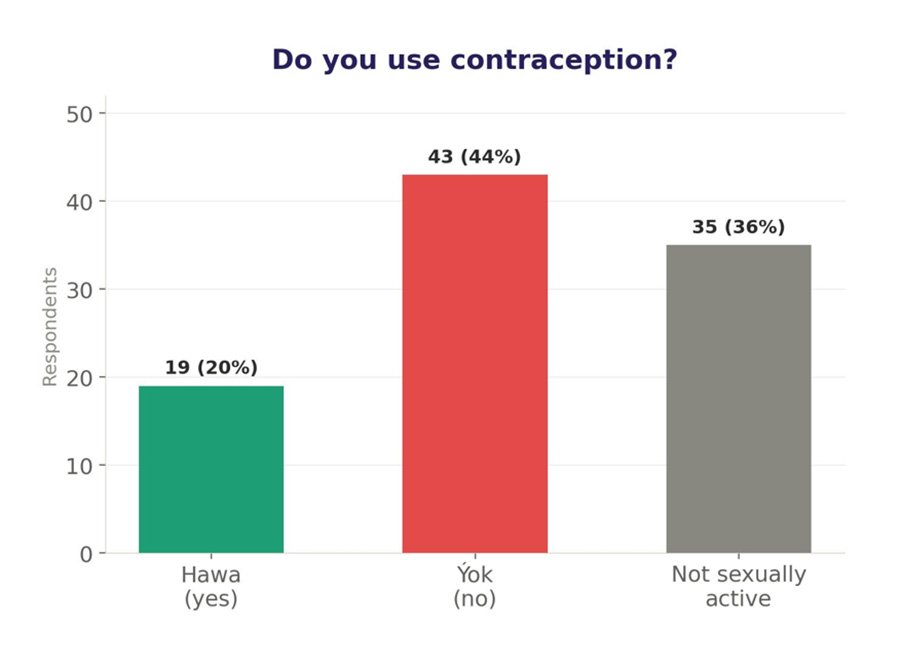
Among those who are sexually active (~64%), only about 31% use contraception. This means roughly 7 out of every 10 respondents are unprotected. It seems that for the vast majority of non-users, the problem is not choice, but the lack of knowledge. Nearly 77% of non-users indicated that they do not know how or where to obtain contraception.
Another interesting finding is that 14.5% of respondents said they use contraception but do not know how to access it. This raises questions about long-term access and a major risk for bodily autonomy as these women might be relying on their partners or others to obtain it. 67% of them cite the internet, and 33% cite teachers or doctors as their main source of reproductive health information.
Rural respondents face a bigger knowledge gap. Despite higher sexual activity among rural respondents (69% vs 62% in cities), 90% of rural women do not know where to obtain contraception – compared to ~69% of city respondents. Yet contraception use rates are similar between the two groups. Roughly 44%-45% of sexually active people in both settings do not use it. Moreover, rural residents have far less knowledge about contraception access (only 15% know where to get it vs 40.5% in cities). So proportionally, rural areas have more people at risk and fewer people informed.
Out of 97, only four people responded that they are sexually not active but do know how and where to obtain contraception. They all live in cities and could be educated about reproductive health through schools, doctors, or the internet but haven’t become sexually active yet, or they may be between partners. This serves as a positive signal that health and sexuality education can reach people before they need it.
Navigating Research Challenges in a Restrictive Environment
The small sample size of the survey makes it challenging to make inferences about the general population. The respondents include mainly city dwellers and internet users, underrepresenting particularly rural residents and those with no or limited digital access.
While surveys such as this one and one from MICS were confidential and anonymous, women and girls might not feel comfortable sharing their honest feedback. Partaking in polls or surveys is not a culturally familiar practice in Turkmenistan and sharing sensitive, family information with outsiders often looked down upon. This may result in many potential respondents experiencing hesitation or dismissing the survey altogether, making it difficult to accurately evaluate the scale of the issue. Nevertheless, this survey findings, although limited in scope, identify patterns worth investigating further through more in-depth research.
Recommendations: A Path Forward for Health Equity
While this survey is small in scale, its findings are consistent with larger datasets published by UN agencies and the government of Turkmenistan. The 2024 MICS data confirm significant unmet need for family planning and limited decision-making autonomy among women. Our survey adds a critical dimension by capturing the experiences of a younger, digitally connected population and exposing an alarming knowledge gap that formal surveys may undercount. These data sources point to the following recommendations to improve the situation in the country:
- Publish data on the usage of reproductive health rooms: Neither the Ministry of Health nor the UNFPA country office currently publish utilization data for the 90+ reproductive health rooms in the country. Making this data publicly available would enable evidence-based planning and accountability.
- Expand reproductive health education in rural areas: There is a clear need for targeted outreach through community health workers, local health facilities, and educational campaigns that do not depend on internet access.
- Integrate comprehensive sexuality education into school curricula: Only a fraction of respondents cited teachers as a source of health information. Formal education is an underutilized channel that could reach women and girls before they become sexually active.
- Reconsider the restrictive abortion law: The limited abortion access combined with widespread lack of contraceptive knowledge places women at heightened risk of unwanted pregnancy.
- Invest in Turkmen-language digital health content: With 77% of respondents relying on the internet for health information, there is an urgent opportunity to create and promote high-quality, medically accurate content in Turkmen. This is particularly critical given that women and girls increasingly rely on social media as a source of information, making them vulnerable to potential misinformation.
- Encourage health professionals to be proactive: Health professionals should be trained and encouraged to initiate conversations about contraception with patients, especially in rural health facilities where awareness is the lowest.