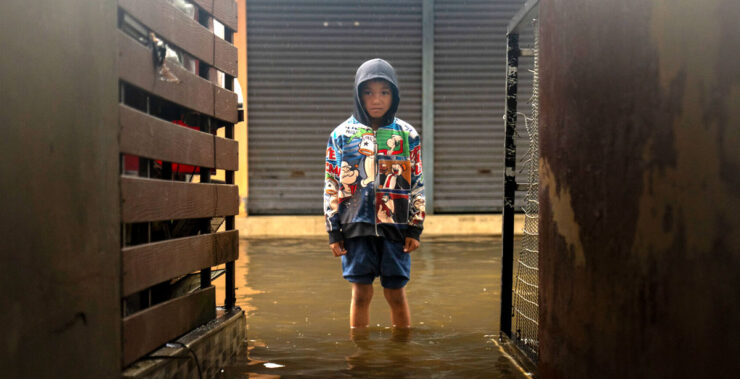
A report by UNICEF titled “Children’s Climate Risk Report 2026” evaluates how climate change threatens children worldwide. Using a detailed global database, the report tracks climate hazards (floods, droughts, storms, extreme heat, fires, sand and dust storms) alongside essential social services (healthcare, education, nutrition, and water and sanitation access) that determine children’s ability to cope.
Globally, nearly all children face at least one climate hazard. However, Turkmenistan stands out with one of the world’s highest shares of multi-hazard exposure, characterized by frequent and severe events. Nearly 88.9% of children in the country are exposed to at least three overlapping climate hazards, which is the highest proportion in Central Asia compared to 52.5% in Uzbekistan. Furthermore, 90.6% of Turkmen children (2.5 million) face multiple high-intensity hazards, marking one of the highest rates globally. Overall, Turkmenistan receives a multi-hazard exposure score of 5.94 out of 10, categorized as “High”, combining both absolute and relative child exposure metrics across various climate threats.
Primary climate hazards in Turkmenistan
The most severe threats for children in Turkmenistan are heatwaves, droughts, sandstorms, and air pollution:
- Extreme heat: 98.6% of children (2.7 million) are exposed to extreme hot days (>35°C);
- Heatwaves:
- 83.5% (2.3 million) of children experience heatwaves (periods of 3 consecutive days or more with high daily maximum temperatures), posing acute risks to infants and young children;
- 78.6% (2.1 million) are exposed to severe heatwaves that have above average intensity;
- 34.5% (942 thousand) experience higher than average (more than 16 heatwaves) annual frequency of heatwaves;
- Droughts: 96.7% of children (2.6 million) are exposed to droughts. Of these, 2.2 million face agricultural droughts where over 30% of cropland is affected;
- Sand and dust storms: 20.5% of children (567 thousand) are exposed to sand and dust storms, as Turkmenistan contains areas highly susceptible to these events;
- Air pollution: 99.5% of children (2.7 million) are exposed to air pollution;
- Riverine floods: 34.5% of children (943 thousand) face riverine flood risks;
- Minimal risk hazards: Coastal floods (0.25%), wildfires (4%), malaria (<0.1%), and tropical storms present minimal or no threat due to geographic factors.
Donate to support Turkmen analysts, researchers and writers to produce factual, constructive and progressive content in their efforts to educate the public of Turkmenistan.
SUPPORT OUR WORKDespite Turkmenistan’s high exposure to severe climate hazards, overall child vulnerability is rated Low (1.43 out of 10). High coverage of essential social services provides a strong protective shield for Turkmen children:
- Healthcare and basic infrastructure: >98% immunization rate against diphtheria, tetanus, and pertussis (DTP); 100% skilled birth attendance;100% electricity access; >99.9% access to basic water, sanitation, and hygiene;
- Education and protection: 99% completion rate for lower secondary eduction; <0.5% child labour rate;
- Nutrition: low child food poverty (4%) and low stunting rates (6.5%);
- Areas for improvement: poverty and social safety nets represent weaker areas. About 5.6% of children suffer from at least one deprivation, and only 14.5% of children under five are covered by cash transfers (direct financial assistance by the government). While under-five mortality is the lowest in Central Asia at 9.01 per 1000 live births, room for improvement remains. Data on child marriage before age 18 remains unavailable.
Addressing the climate crisis in Turkmenistan requires immediate action focused on protecting children. Key priorities include curbing emissions across all sectors and shifting toward climate-resilient food chains. At the same time, children and youth must be empowered to take an active role in shaping solutions, supported by improved regional data collection to fill critical information gaps. Critical social infrastructure, including healthcare, education, and water systems must be adapted to endure extreme heat and prolonged droughts. Finally, national adaptation plans and climate policies must embed children’s rights directly into their core objectives.