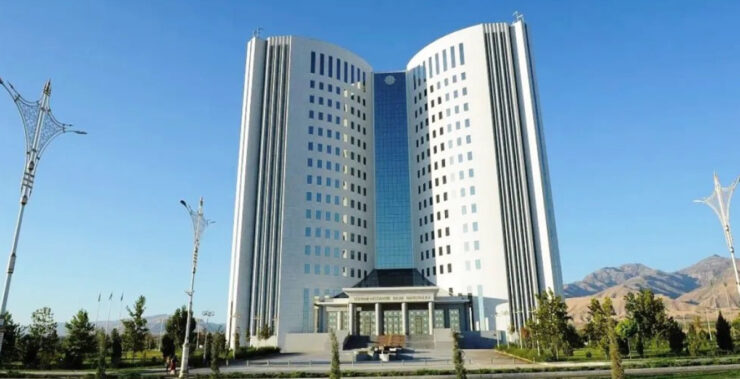
On May 13, 2026, Turkmenistan enacted Order No. 195, mandating that state diplomas be issued in Turkmen and English, officially replacing Order No. 212 of 2019. Under the new rule, transcripts can also be issued in English using standardized Ministry terminology upon request. While the text of the 2019 decree is not public, regional history and recent Central Asian mutual-recognition pacts indicate that diplomas were previously issued in Russian, the traditional shared language of the post-Soviet space. By pivoting to English, Turkmenistan is deliberately shifting from a regional framework to a global standard, allowing its academic credentials to be seamlessly verified worldwide.
In the context of international degree recognition, this shift to a bilingual format is a positive change that benefits graduates in several ways:
Donate to support Turkmen analysts, researchers and writers to produce factual, constructive and progressive content in their efforts to educate the public of Turkmenistan.
SUPPORT OUR WORK- Bypassing the “Translation Trust” Barrier: Previously, graduates applying to Western universities or employers had to pay for certified translations and notarizations. Foreign evaluation agencies (like WES in the US or ENIC-NARIC in Europe) often view third-party translations with suspicion. An official, university-issued English document carries immediate legal weight.
- Standardizing Academic Terminology: In the past, independent translators often translated specialized Turkmen degrees into inconsistent English terms, complicating credential evaluations. Order No. 195 solves this by using a standardized glossary aligned with international educational classifications, such as UNESCO’s ISCED.
- Direct Integration into Global Databases: International evaluation systems like Germany’s Anabin or the UK’s Ecctis rely heavily on exact textual matches. Official English formatting allows these global databases to catalog and verify Turkmen degrees much faster and more accurately.
- Reducing Cost and Bureaucracy: Graduates save significant time and money by skipping the complex, multi-step loop of legal translation, notarization, and consular legalization.
By anchoring its degrees to a standardized English glossary, Turkmenistan is making its educational output readable to the global market. This reform directly aligns with the country’s broader ambition to integrate into the Lisbon Recognition Convention – the international treaty ensuring fair and transparent degree recognition across borders.