The 2026 “State of Food Security and Nutrition in the World” report focuses on understanding and addressing the high cost of healthy diets. In Turkmenistan, 4.1% of the population is undernourished while 1.1 million adults are obese. While data for Turkmenistan is missing, the regional average for Central Asia shows that healthy diets remain economically out of reach for 11.3% of people.
Turkmenistan Indicator Breakdown
- Undernourishment (2023-2025): The prevalence stands at 4.1% (300,000 people). While down slightly from 4.3% in 2004-2006, the absolute number of affected people increased from 200,000.
- Child Health (2024 Estimates):
- Stunting: Affects 6.5% of children (~100,000), down from 12.6% in 2012.
- Wasting: 4.1% (<100,000 children).
- Overweight: 4.8% (<100,000 children), showing little change since 2012 (4.9%).
- Low Birthweight (2020): 4.3%, down slightly from 4.9% in 2012.
- Dietary Diversity: 79.0% of children aged 6-23 months achieved minimum dietary diversity.
- Maternal Health and Nutrition:
- Anaemia (2023): Affected 34.8% of women aged 15-49 (~700,000 women) – an increase of 100,000 women since 2012.
- Exclusive Breastfeeding (2024): Reached 56.5% of infants under six months, marking a major rise from 10.9% in 2012. However, the most recent MICS data from 2024 shows that exclusive breastfeeding actually dropped from 56.5% in 2019 to 35.5% in 2024.
- Adult Health: Obesity among adults reached 22.2% in 2024 (1.1 million people), nearly doubling from 16.9% (600,000 people) in 2012.
- Missing Data Points for Turkmenistan: Moderate/severe food insecurity totals, women (aged 15-49) achieving minimum dietary diversity, cost of a healthy diet and the exact share of the population unable to afford a healthy diet.
Figure 1. Prevalence of Undernourishment in Turkmenistan (Annual)
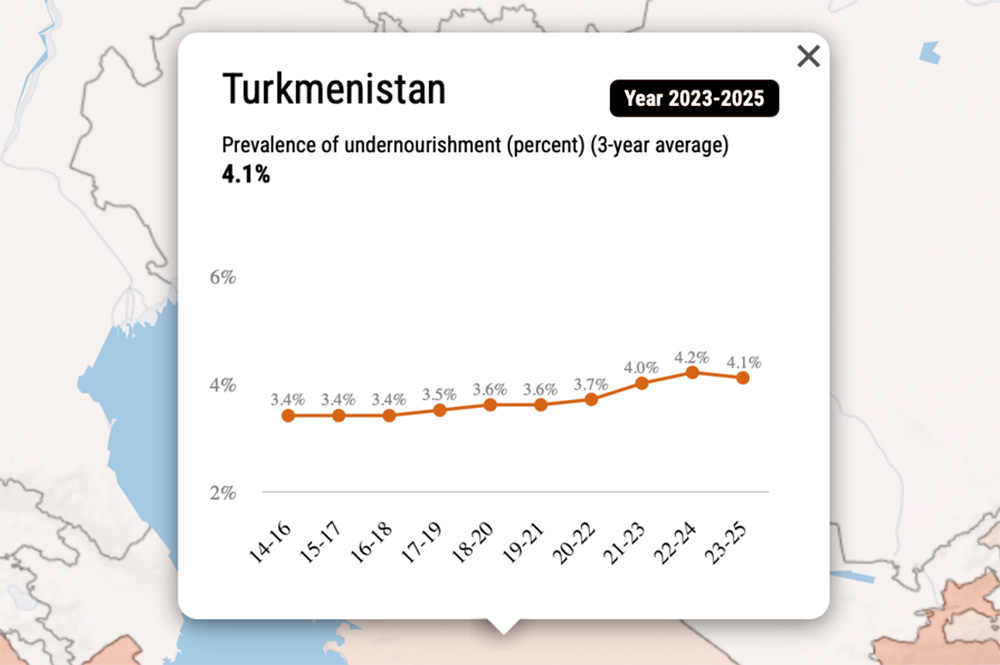
Source: FAO Hunger Map, 2025
Donate to support Turkmen analysts, researchers and writers to produce factual, constructive and progressive content in their efforts to educate the public of Turkmenistan.
SUPPORT OUR WORKSystemic Drivers and Policy Recommendations
Food security challenges are driven primarily by nutrient-dense foods (making up nearly 70% of a healthy diet) costing disproportionately more than staples. This is compounded by midstream value chain inefficiencies, high input costs for perishables, historical policy biases toward starchy staples, and external energy shocks from the 2026 Middle East conflict.
To lower dietary costs sustainably, the report advocates:
- Agrifood Transformation: Reorienting R&D and repurposing agricultural subsidies away from staples toward nutrient-dense options like fruits, vegetables, and legumes.
- Value Chain Efficiency: Upgrading physical infrastructure (cold chains and rural roads) and utilizing granular data, trade integration, and nutrition-sensitive social protection.