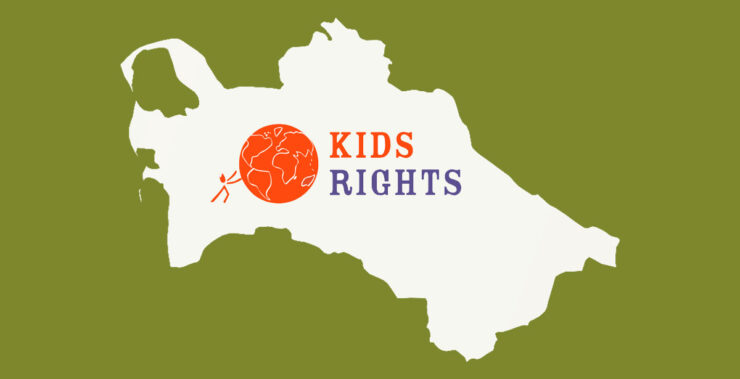
The KidsRights Index 2026 ranks Turkmenistan75th globally out of 194 countries and 13th out of 21countries in Eastern Europe and Central Asia. Although the country climbed seven places from its 2025 global ranking, it remains considerably below its 2024 position of approximately 33rd.
The KidsRights Index measures annually how children’s rights are respected worldwide and the extent to which States Parties to the UN Convention on the Rights of the Child commitments are implemented. The Index uses high-quality data published by the United Nations Children’s Fund (UNICEF), the United Nations Department of Economic and Social Affairs (UNDESA), the United Nations Development Program (UNDP), the World Health Organization (WHO), and the Committee on the Rights of the Child. It measures five domains: life, health, education, protection, and the enabling environment for children’s rights.
According to the results of the Index, Turkmenistan’s performance overall appears moderate, but it is uneven across five domains. The country ranks 4th in healthcare, 54th in protection, 77th in education, 123rd in the enabling environment for children’s rights, and 130th in life.
Turkmenistan’s high ranking in children’s health appears encouraging; however, it may not fully reflect the realities experienced by children across the country, particularly given limited government transparency and significant gaps in the verifiable data available to the UN agencies.
The United Nations Children’s Fund (UNICEF) 2025 report highlights major gaps in child mental health services and parenting support in Turkmenistan. It found that 70% of children aged 1–14 experienced at least one form of violent discipline and 58% experienced psychological aggression. Also, children are affected by violence against a woman within the family.
A national survey carried out by the United Nations Population Fund (UNFPA) revealed that children witnessed a beating at least once in 25% of families in which a woman had experienced physical violence by her husband or partner. These findings expose serious problems in the broader context that the healthcare ranking alone does not capture.
At the same time, the poor rankings for education and protection indicate continuing gaps. The country still lacks a strong child-protection system and child-friendly complaint mechanisms, while the rankings for the enabling environment and right to life point to deeper weaknesses in government policies, institutions, implementation, and children’s survival outcomes.
Overall, the index results call for national and international efforts, which are necessary to curb the continuing rise in child rights violations and to address persistent but often overlooked child rights concerns in Turkmenistan.
What does the UN Committee on Right of Child recommend?
Donate to support Turkmen analysts, researchers and writers to produce factual, constructive and progressive content in their efforts to educate the public of Turkmenistan.
SUPPORT OUR WORKThe following recommendations and structural conclusions were provided by the UN Committee on the Rights of the Child regarding the implementation of children’s rights in Turkmenistan:
- Non-discrimination: Take stronger corrective action against persistent de facto discrimination against children with disabilities, children living in poverty, and children from minority groups.
- Best interests of the child: Ensure that the best-interests principle is integrated and consistently applied across all child-related decisions.
- Respect for the views of the child: Ensure the effective implementation of legislation concerning children’s right to express their views in all settings.
- Enabling legislation: Adopt implementing by-laws and enforcement mechanisms to ensure the effective application of legislative reforms concerning children’s rights.
- Best available budget and resources: Improve transparency regarding specific budget allocations for children’s rights.
- Collection and analysis of disaggregated data: Immediate attention is required to strengthen the collection and analysis of disaggregated data.
- State-civil society cooperation for children’s rights: Remove restrictions on civil society registration and enable NGOs to contribute effectively to monitoring and implementing children’s rights.
For further insight into this issue, explore related analyses below:
Children and Women at Risk: What MICS7 Reveals About Protection and Opportunity in Turkmenistan
Unequal Beginnings: Children’s Development in Turkmenistan After Census 2022
Fining Parents, Failing Children: New Parental Fines in Turkmenistan
Government Data on the Well-Being of Children in Turkmenistan