More than half of all migrants from Turkmenistan are women. By mid-2024, women accounted for 52.6% of the country’s emigrant population, up slightly from 52.3% in 2019.This reflects a broader regional pattern: female migrants make up 52% of the international migrant population in Central Asia.
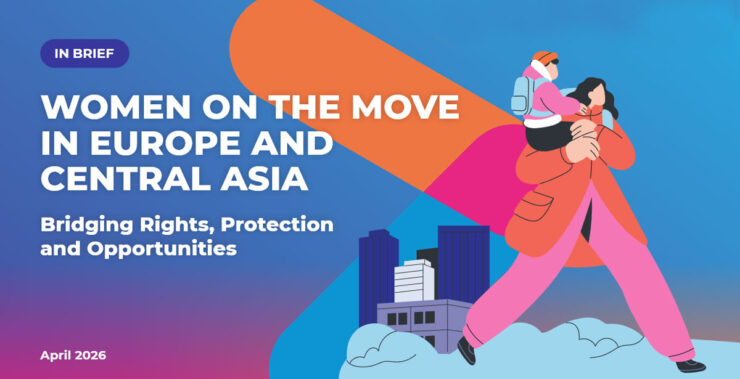
A new report by the United Nations Women (UN Women) presents evidence on the gender dimensions of mixed migration across Europe and Central Asia (ECA) and exposes how precarious work, trafficking, social stigma and weak government protection leave Turkmen women vulnerable abroad and unsupported when they return home.
According to the report, women often migrate to escape poverty, the lack of jobs at home, conflict, climate disasters, and typically work in lower-paid, informal sectors, such as caretakers, childcare workers, cleaners, market vendors, or factory and farm workers.
The Situation of Turkmen Women Migrants
The report highlights that many Turkmen female migrants are concentrated in domestic care and live in care work, and many are pushed to work in precarious jobs, exposing them to discrimination, gender-based violence, and trafficking.
Türkiye is one of the top destinations for Turkmen labor migrants, and in 2024, it hosted 113,762 Turkmen nationals, of which 53,539 were male and 60,223 were female. Turkmen women made up 52.9% of the total, and much of this employment is often in informal, poorly paid, weakly protected domestic work.
Human trafficking emerges as one of the report’s serious concerns. In 2024, Turkmen women were trafficked abroad to Türkiye and possibly the United Arab Emirates for sexual exploitation. According to the report, Turkmen men and women are trafficked for labor in Türkiye or other countries. Despite the seriousness of the situation, the government provides limited acknowledgment and reports few to no convictions annually. This lack of recognition is unsurprising, given that trafficking already exists within the country: the United States has described state-imposed forced labor in Turkmenistan’s cotton sector as a “government policy or pattern of trafficking”.
The failure to identify victims of trafficking means, in practice, that women migrants remain in exploitation or are treated as illegal migrants or criminals instead of victims and do not receive any protection or justice that they deserve from the Turkmen government. More concerningly, many victims return or are expelled from the destination country with debts, and no returnee integration policy or help from anyone is available in Turkmenistan. Essentially, survivors of sexual exploitation face harsh social stigma as they may be seen as “dishonoured”; and often, upon return, many women may hide their experiences to avoid family shame, divorce, or ostracism.
Donate to support Turkmen analysts, researchers and writers to produce factual, constructive and progressive content in their efforts to educate the public of Turkmenistan.
SUPPORT OUR WORKAlthough Turkmenistan criminalizes trafficking, as it adopted a Law on Combating Trafficking in Persons in 2016 and the UN Trafficking in Persons Protocol (known as the Palermo Protocol) in 2005, its implementation remains limited. The country does not have official, free-of- charge assistance like hotlines and police units for trafficking, nor has it developed policy frameworks to manage the return and rehabilitation of survivors of trafficking.
According to the report, these protection gaps extend to other groups of women on the move. Unlike other Central Asian governments, Turkmenistan also lacks a policy framework to reintegrate women and children returnees from armed conflict zones. Turkmenistan has a 2017 Law on Migration and a 2012 asylum procedure on paper but no active asylum system. The government naturalized many Afghans in the past, but later stopped new recognitions.
A Call for Protection in Turkmenistan
Overall, the report demonstrates the urgent need for comprehensive, updated migration data covering all forms of migration and systematic tracking of women during the migration process, which is essential to design effective policies to protect women’s rights, reduce risks, and support their economic and social contributions throughout the migration process.
Turkmen government must recognize migrant women and trafficking survivors as people with rights and should identify and protect victims, investigate traffickers, publish gender-disaggregated migration data, and provide all the necessary psychosocial support. As long as restrictive policies, weak implementation, and limited transparency continue to shape migration governance, Turkmen women will continue to remain largely invisible and unsupported both abroad and upon their return, making it difficult for them to rebuild their lives without falling back into poverty, exploitation, or silence.
The International Organization for Migration (IOM) defines migration in general as “the movement of persons away from their place of usual residence, either across an international border or within a State”, encompassing various types of migration including economic, educational, family, seasonal, forced, climate-related and return migration.