
For the first time since Turkmenistan released its 2022 population census, an analytical report has examined what the data reveals about children’s lives and development. Published by UNICEF in collaboration with the State Committee of Statistics of Turkmenistan, Census 2022 – The Situation of Children in Turkmenistan fills a notable gap. Until now, census results had not been meaningfully analyzed by national media, ministries, universities, or research centers. The given report is not even published on the website of the State Committee of Statistics of Turkmenistan. Drawing directly on census data, the report offers insights into demographics, early childhood development, education, child functioning, and early marriage and childbirth. Together, these findings paint a mixed picture of strong educational participation alongside structural inequalities that could shape Turkmenistan’s long-term human development.
There are no independent media and civil society in Turkmenistan to engage with UNICEF, to check and to corroborate the findings of this publication. UNICEF chooses not to engage with independent Turkmen media and civil society based outside of the country. Below are the major takeaways.
Demographic Signals: A Slowing Birth Rate
One of the most consequential findings is demographic. The number of children aged 0–4 is 1.2 times lower than those aged 5–9, pointing to a recent decline in birth rates. Over time, this trend could ease pressure on education and health systems, but it also raises questions about future labor supply, population aging, and economic sustainability if the decline continues without productivity gains.
Education: Strong Participation, Weak Foundations
Near-Universal School Attendance: On the positive side, Turkmenistan demonstrates exceptionally high school attendance. Participation is nearly universal for primary and basic secondary education, with 99.4% of children aged 6–9 and 99.2% of those aged 10–15 enrolled. Attendance remains high even at ages 16–17, at 93.7%, with most non-attending children having already completed schooling. This provides a solid base for literacy, numeracy, and future workforce participation.
Preschool as the Critical Bottleneck: In contrast, early childhood education remains a major weakness. National preschool attendance for children aged 3–5 stands at just 40.5%, with only marginal differences between boys and girls. This gap matters: early childhood is when cognitive, social, and emotional foundations are laid. Limited access at this stage risks entrenching inequalities before formal schooling even begins.
Rural–Urban and Regional Inequalities
Where Children Live: A majority of children (57.8%) live in rural areas, compared to 42.2% in urban settlements. Rural households are also larger: 48.9% have three or more children, compared with 36.0% in cities. This places additional pressure on household resources and public services in rural regions.
Unequal Access to Preschool: The rural–urban divide is stark in early education. While 64.7% of urban children attend preschool, only 23.8% of rural children do. Regional disparities are even sharper. In Dashoguz velayat, preschool attendance is just 19.1%, compared with over 70% in Ashgabat. Without targeted policy interventions, these gaps risk reproducing regional inequality in learning outcomes, health, and future earnings.
Donate to support Turkmen analysts, researchers and writers to produce factual, constructive and progressive content in their efforts to educate the public of Turkmenistan.
SUPPORT OUR WORKChild Functioning and Inclusion
The census data identifies thousands of children facing functional difficulties, with important implications for inclusive policy. Among children aged 5–17:
- 3,106 experience difficulties walking or climbing stairs;
- 1,989 have difficulties remembering or concentrating;
- 1,791 have hearing difficulties;
- 1,784 have vision difficulties.
In every category, boys outnumber girls. The report emphasizes that these challenges can limit participation in education and social life if environments are not adapted. Without inclusive schooling, accessible infrastructure, and early support services, these children face long-term risks to their ability to fully realize their rights and contribute economically.
Early Marriage and Childbirth: Low but Persistent
Encouragingly, early marriage rates are relatively low. Among children aged 15–17, 0.9% of boys and 1.2% of girls are in registered or unregistered marriages. Still, the numbers are not negligible. The census reports 1,770 girls aged 15–17 in marriages or partnerships, and 339 who have given birth to a live child, most of them aged 17.
The average fertility rate in this age group is 2.5 births per 1,000 girls, with higher rates in regions such as Akhal velayat (4.2 per 1,000). Early childbirth, even at low prevalence, can disrupt education, limit labor market participation, and perpetuate cycles of disadvantage if support systems are weak.
Can Children Reach Their Full Potential?
The census findings point to a clear paradox in Turkmenistan’s human development trajectory. Near-universal school attendance provides a solid foundation for building human capital, yet this strength is undermined by weak early childhood provision, deep regional disparities, and limited support for children with functional difficulties. Children in regions such as Dashoguz, where preschool access is extremely low, begin formal education at a disadvantage compared to their peers in Ashgabat, while children with disabilities remain at risk of exclusion in environments that are not designed to accommodate their needs. Closing these gaps is critical if high enrollment rates are to translate into real, long-term social and economic gains. Ultimately, the challenge for Turkmenistan is no longer access to schooling alone, but ensuring that every child, regardless of geography or ability, is supported from the earliest years to reach their full potential.
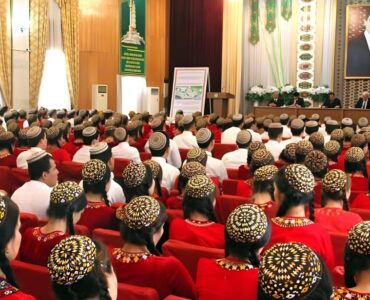
Photo: © UNICEF Turkmenistan