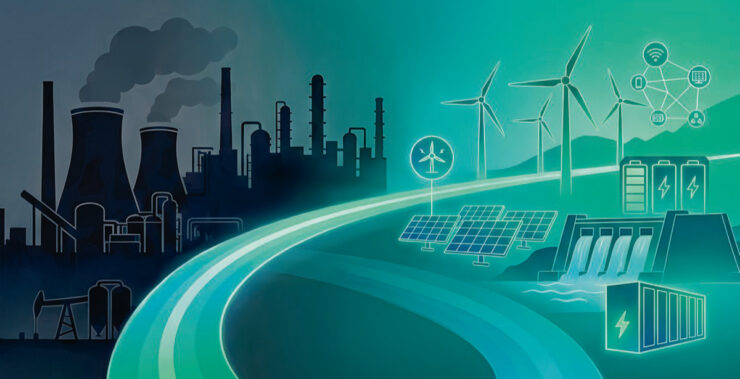
This 2026 report Energy in Central Asia: Modernization of the Energy Sector and Energy Transition by the Eurasian Development Bank (EDB) analyzes the urgent transformation of Central Asia’s energy sector as it faces rising demand, aging infrastructure, and climate pressures. It proposes a pragmatic “middle way” strategy to balance the energy trilemma – security, affordability, and sustainability – by modernizing existing systems while gradually integrating renewables and strengthening regional cooperation.
Turkmenistan stands out as both resource-rich and structurally vulnerable due to its extreme reliance on a single resource – natural gas. Below are the highlights of the major challenges facing Turkmenistan and the optimal way forward suggested by the EDB.
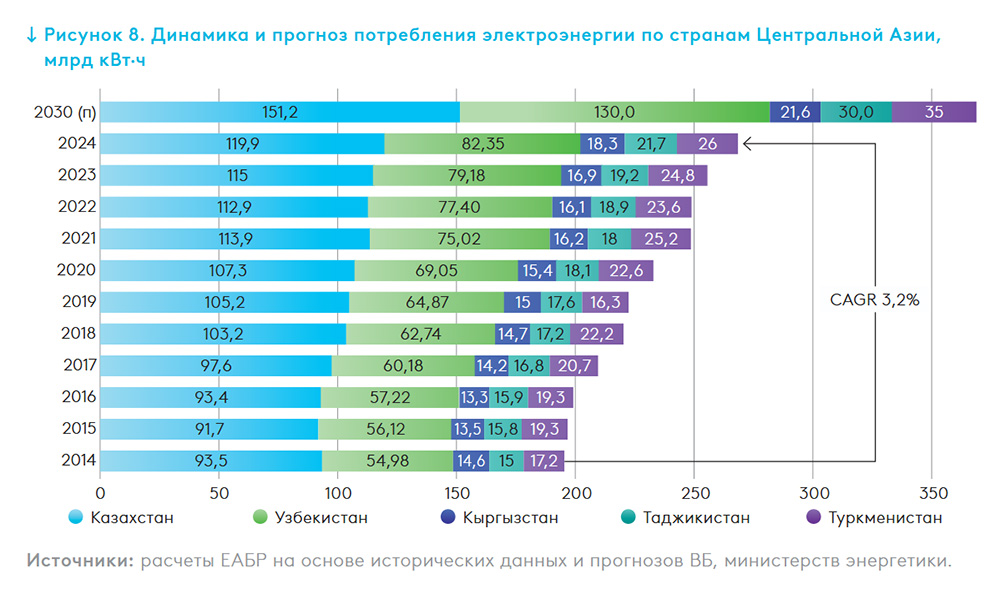
Generation and Resource Base: Turkmenistan possesses vast natural gas reserves, which currently fuel 99.9% of its electricity generation. This lack of diversification makes its system susceptible to technical failures, supply fluctuations, and long-term sustainability risks. The electricity consumption in Turkmenistan was 3,500 kWh per person in 2024, the second highest in Central Asia after Kazakhstan, which is expected to increase by 35% by 2030 (Figure 8).
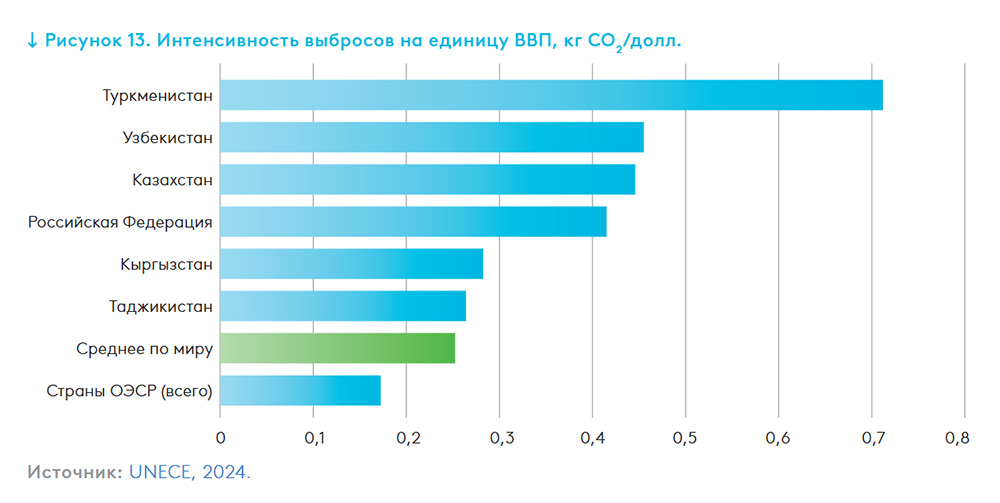
Sustainability and Efficiency: The country faces severe environmental challenges, ranking 96th in the UN SDG index, the lowest in the region. As illustrated in Figure 13, Turkmenistan has the highest emissions intensity among the compared countries at about 0.8 kg CO₂ per USD, far above the Central Asian average and significantly higher than the global (~0.3) and OECD (~0.15) averages. It is also a top-5 global methane emitter due to poor control of leaks during gas production and transport.
Affordability vs. Infrastructure: Historically, electricity in Turkmenistan has been nearly free (<1 cent/kWh), leading to anomalously high per capita consumption and a lack of incentives for energy efficiency. This tariff policy has left the sector chronically underfunded, hindering the modernization of its 6,945 MW of installed capacity.
Donate to support Turkmen analysts, researchers and writers to produce factual, constructive and progressive content in their efforts to educate the public of Turkmenistan.
SUPPORT OUR WORKRegional Integration: While its neighbors are increasingly looking toward regional exchanges to balance seasonal deficits, Turkmenistan largely operates autonomously, focusing its efforts on export corridors toward Afghanistan and Pakistan.
Renewable Progress: Despite immense solar and wind potential, Turkmenistan’s current diversification goals are the most modest in the region, focusing only on a 300 MW solar plant and a 10 MW hybrid pilot project.
Overall, the EDB recommends Turkmenistan a “Middle Way” strategy that rejects radical shifts in favor of a pragmatic, phased approach. It would combine modernization of gas-fired power plants with gradual renewable deployment, alongside urgent efforts to reduce methane emissions and improve industrial energy efficiency. Crucially, tariff reforms – moving toward cost-reflective pricing while protecting vulnerable households – will be necessary to unlock investment and ensure long-term system reliability. Whether Turkmenistan can evolve into a more diversified, efficient, and regionally connected system will determine not only its own energy future, but also its role in shaping Central Asia’s broader energy transition.