Findings published by the World Health Organization indicate that public spending on health care in Turkmenistan falls short of its obligations to guarantee the right to health. People in Turkmenistan have the highest level of out-of-pocket spending in the region. The government does not provide any information concerning spending on healthcare and governance of the sector to the public.
Public health data from the World Health Organization (WHO), analysed by Human Rights Watch, reveal that large segments of the population worldwide struggle to pay the costs of healthcare due to governments’ failure to provide adequate public funding, relief, and improved access to public health care systems. Insufficient public funding places the burden of financing health care on individuals and households, creating serious inequalities and raising human rights concerns.
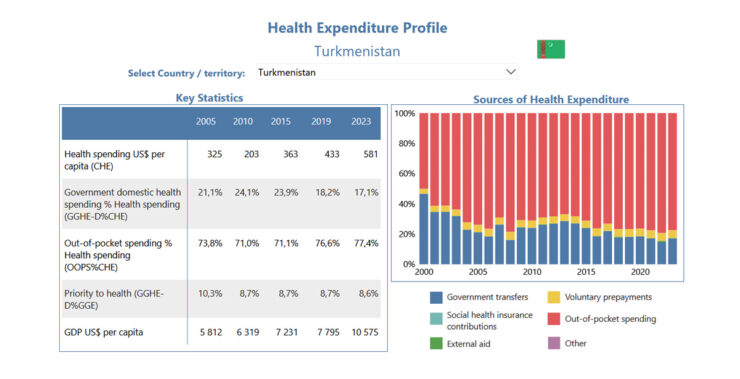
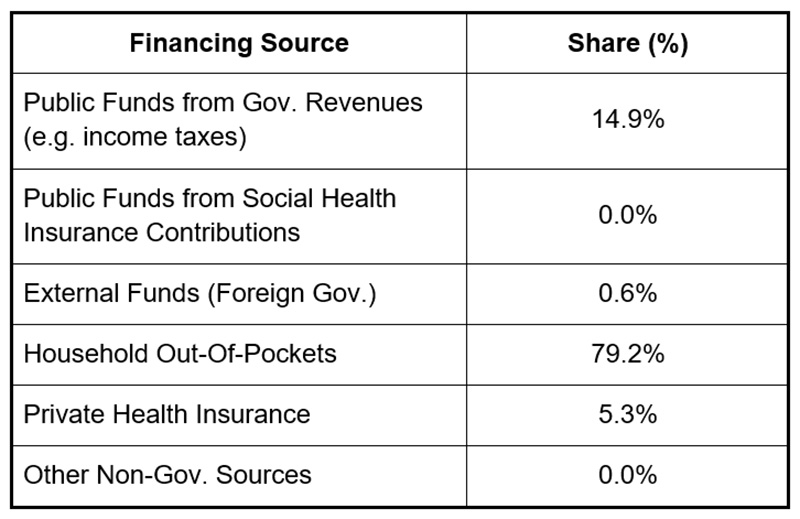
The data reveal that Turkmenistan is one of the countries with very low public funding for healthcare, with only around 14.9 percent of healthcare spending coming from public funds from government revenues in 2022, such as taxes or state budget funds. It barely met the WHO benchmark for health spending, at 5 percent of GDP or 15 percent of government expenditures, but it is recorded to be at 17.1 percent in 2023.
The data also indicate that public funds from social health insurance contributions in Turkmenistan were recorded as zero percent, indicating the absence of a formally recognised social health care mechanism. Although the Ministry of Health of Turkmenistan outlines the administrative functioning and benefits of the state “voluntary” health insurance scheme, in which individuals are required to contribute approximately 3 percent of their income, it does not disclose its sources of financing or the allocation of contributions, including contributions from employees, employers, and the self-employed, further constraining transparency in the system.
More concerning, the data show that about 79.2 percent of all healthcare spending in Turkmenistan in 2022 came from household out-of-pocket payments, and in 2023, this figure was 77.4 percent. The WHO considers this financing structure to be a catastrophic health spending and highly risky for households, as when people need medical treatment, they may be discouraged from seeking care early or at all due to serious financial pressure, increasing the risk that illness pushes households into poverty.
Table 1: Sources of Healthcare Financing in Turkmenistan
Source: Human Rights Watch, 2025
Donate to support Turkmen analysts, researchers and writers to produce factual, constructive and progressive content in their efforts to educate the public of Turkmenistan.
SUPPORT OUR WORKIn the region, public funding for healthcare accounts for61.5%and households pay 30.9%in Kazakhstan, followed by Kyrgyzstan, wherepublic funding reaches 53.7%, with households paying 38.4%. Despite its upper-middle-income status, Turkmenistan’s healthcare financing profileplaces it alongside several African countries with similarly high out-of-pocket spending,such as Cameroon and Nigeria.
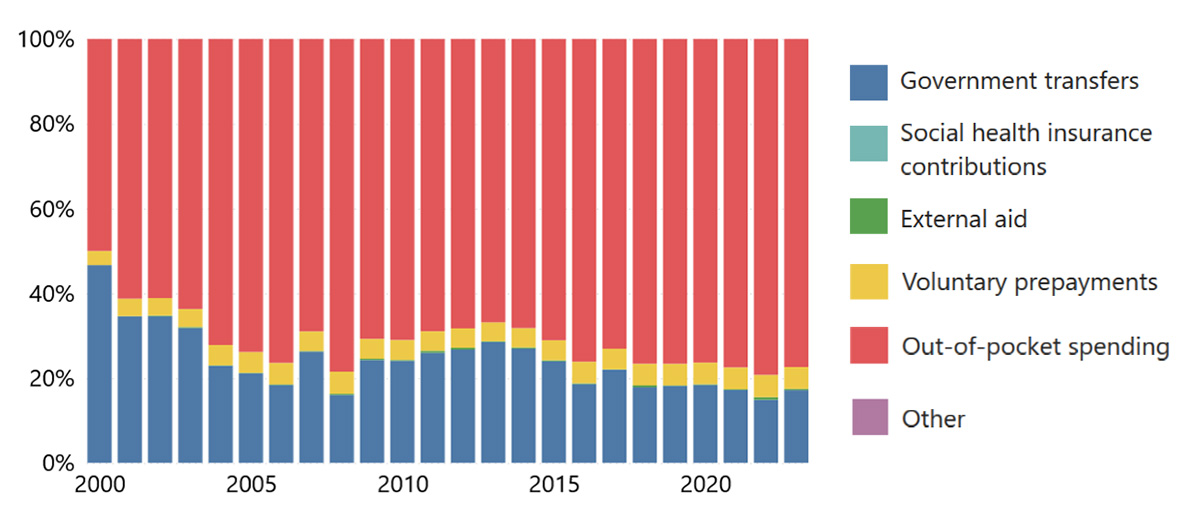
Figure 1: Sources of health expenditure of Turkmenistan
Source: WHO, 2025
Trends in public healthcare spending during the pandemic, adjusted for inflation, purchasing power, and population growth, showed an average increase of 27 percent between 2019 and 2022, but Turkmenistan experienced a decrease of 13.09 percent in public healthcare spending from pre-pandemic levels to 2022.
However, this allocation reflects constrained public prioritization by the governments due to conflict or high debt, and Human Rights Watch emphasizes that healthcare funding is largely a policy choice. Therefore, the Turkmen government needs to prioritise healthcare in the state budget, consolidate public financing mechanisms, and most importantly, work on reducing reliance on out-of-pocket payments to match its population’s needs. Without such changes, many people in Turkmenistan will likely continue to face significant barriers to affordable healthcare, as access depends on a person’s ability to pay rather than their medical needs, especially in low- and irregular-income households.