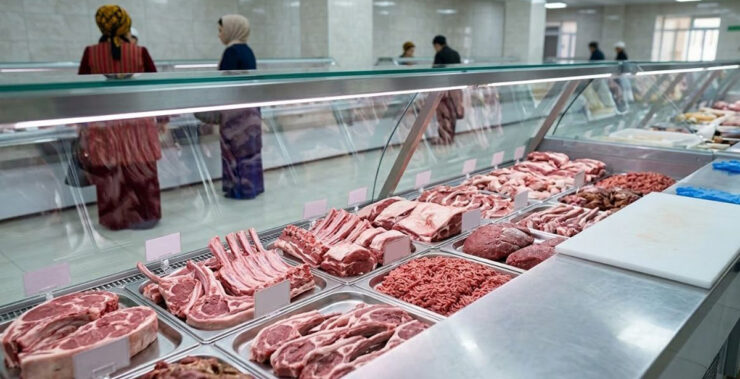
Meat has long been central to Turkmen diets, particularly in traditional dishes such as “palaw”. However, as beef prices surge by more than 50%, it increasingly highlights a deeper economic problem: the growing difficulty for households to afford a staple that forms the backbone of everyday meals.
Our World in Data findings from 1992 to 2023 reveal that bovine, mutton, and goat meat dominate, accounting for half of consumption in Turkmenistan. In 2022, Turkmenistan consumed 55kg of meat per person, including fish, placing it second after Kazakhstan; however, per capita consumption has since decreased.
According to the most recent Food and Agriculture Organization of the United Nations (FAO) 2023 dataset, Turkmenistan has consumed roughly 51,16 kg of total meat per person annually, with bovine meat about 23,46 kg, sheep/goat meat around 17,56 kg, and poultry of only 8,16 kg forming the core of intake, alongside smaller quantities of pig meat of only 0.08 kg.
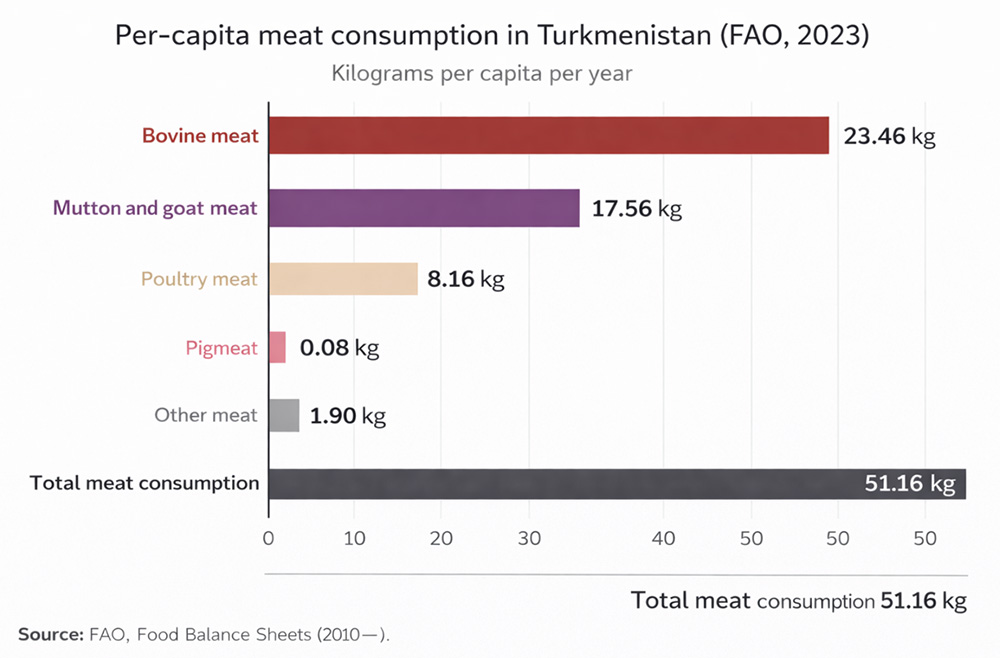
Source: FAOSTAT Food Balance Sheets, 2023
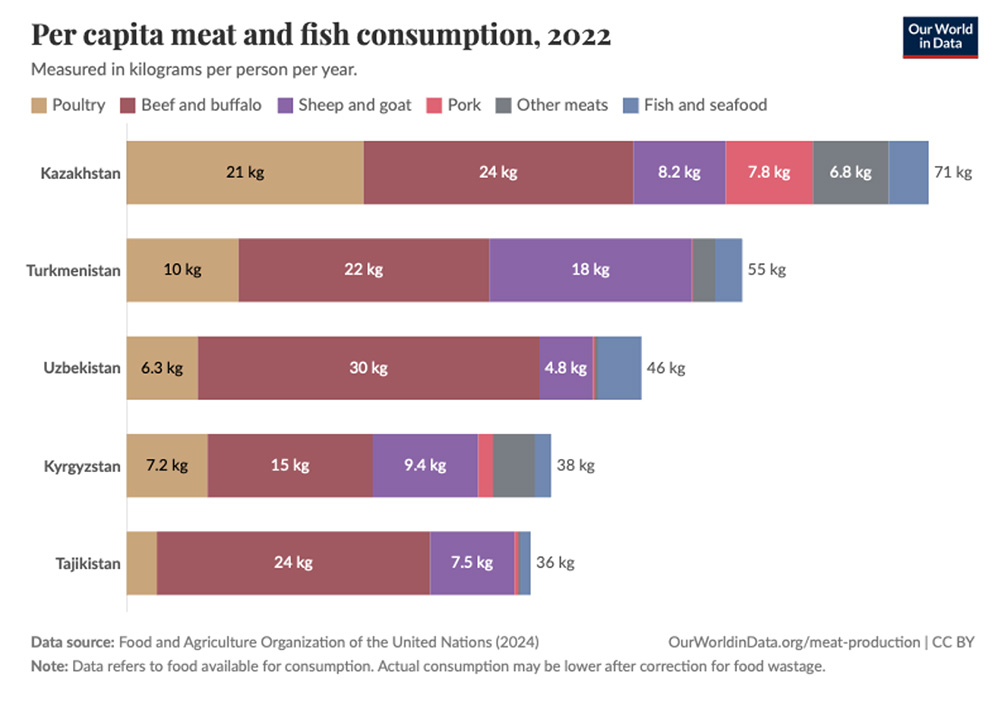
Source: Our World in Data, 2022.
Donate to support Turkmen analysts, researchers and writers to produce factual, constructive and progressive content in their efforts to educate the public of Turkmenistan.
SUPPORT OUR WORKWhile meat consumption ranks highly in Turkmenistan, meat prices have also been rising, along with constrained affordability for many residents. According to the Palaw Index, which tracks the food inflation in Turkmenistan, average retail meat prices reached around 94 manat per kilogram in November 2025, up from roughly 62.2 manat a year earlier, representing a 51.2 percent increase. A key factor behind this price surge has been the deterioration of livestock conditions.
According to the Palaw Index monitoring, beef prices began climbing sharply in mid-2025 following livestock losses caused by drought, malnutrition, and disease. Reduced herd sizes placed upward pressure on supply, pushing meat prices higher. Since then, the price of meat has stabilized at higher levels, informal market observations indicate considerable volatility, with prices reportedly reaching as high as 155 manat per kg in the autumn of last year. Despite this major price volatility, the government’s communication on price increases has been non-existent or limited, raising concerns about affordability relative to average incomes.
The official monthly minimum wage in Turkmenistan had been established at 1,410 manat in 2025, sufficient to purchase 14 kilograms of meat at a market price of 100 manat per kilogram. Also, the authorities did not announce the customary annual 10% increase in public sector wages, pensions, and social benefits in 2025, a measure traditionally used to protect purchasing power from inflation, resulting in uncertainty about the continuation of income indexation, as reported by Progres.online. Since meat provides essential high-quality nutrients for an adequate diet, limited affordability directly affects the ability of households in Turkmenistan to meet basic needs due to severe constraints on purchasing power, especially for lower-paid workers and households.
As meat prices continue to rise faster than wages, the cost of preparing everyday meals in Turkmenistan is steadily increasing. For many households, the rising price of meat is not simply a market fluctuation but a sign of declining purchasing power and mounting pressure on traditional diets.